
OH Cabinets with Power Backup
Switchboards for 7-port switches
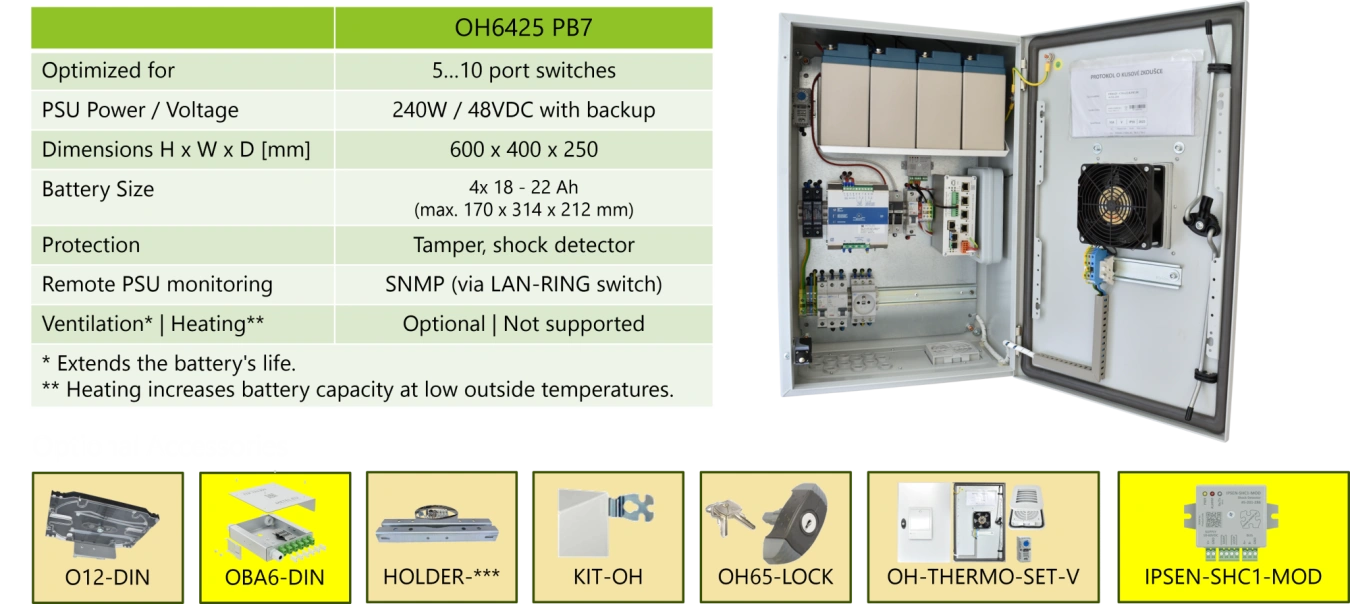
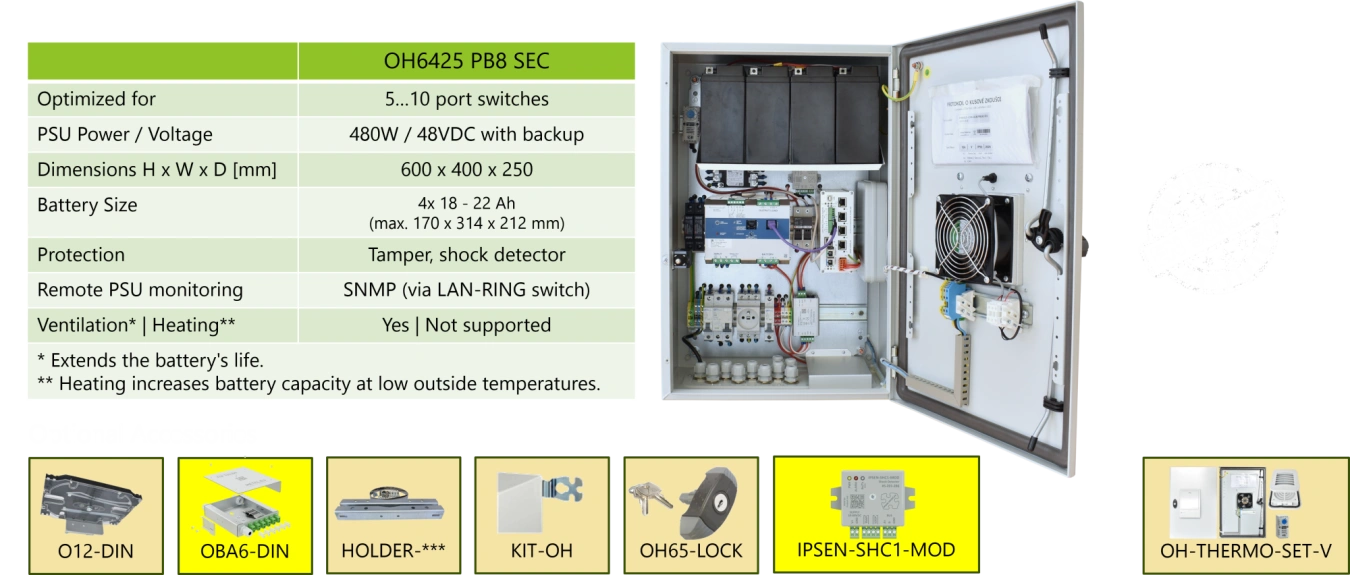
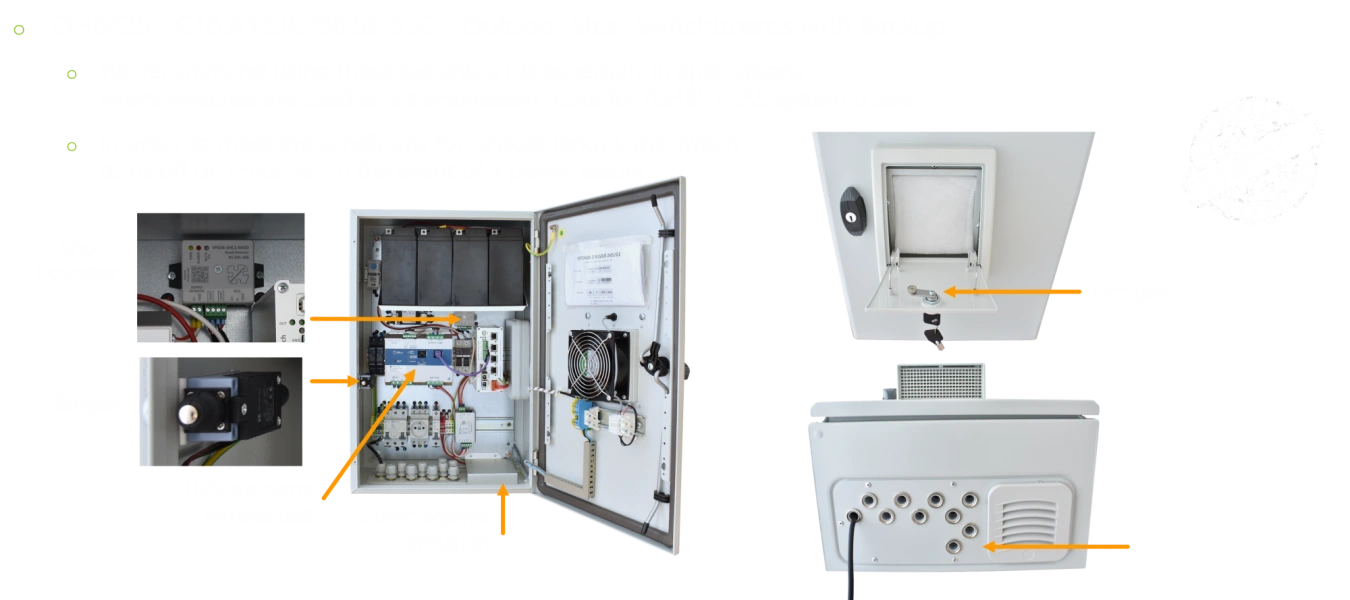
The OH6425 redundant enclosures can also be equipped with a thermoset, which provides automatic cooling control and maintains the optimum operating temperature inside the enclosure.
Another option is the connection of a shock sensor, which allows the detection of vibration or tampering. With these expandable features, the OH6425 enclosures not only provide effective protection for network equipment, but also ensure stable operation in harsh environments.
Enclosures for 10-port switches
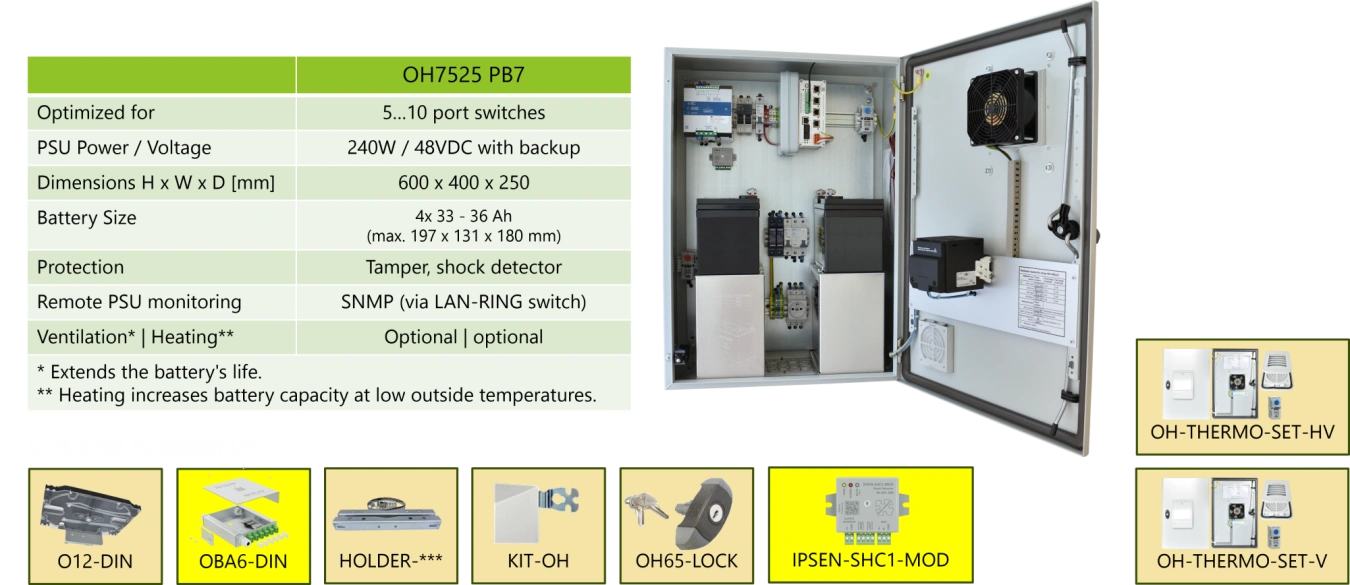
In addition to ventilation, the OH7525 series back-up switchgear can also be equipped with heating, which ensures stable operation of the equipment even under extreme temperature conditions. These conditions are particularly suitable for batteries. Thanks to this option, the switchgear can be effectively protected against overheating in the summer months as well as against low temperatures in the winter period. This flexibility allows them to be reliably deployed in a variety of climatic conditions and ensures optimum functionality of network equipment throughout the year.
Advantages of using a 4VDC system
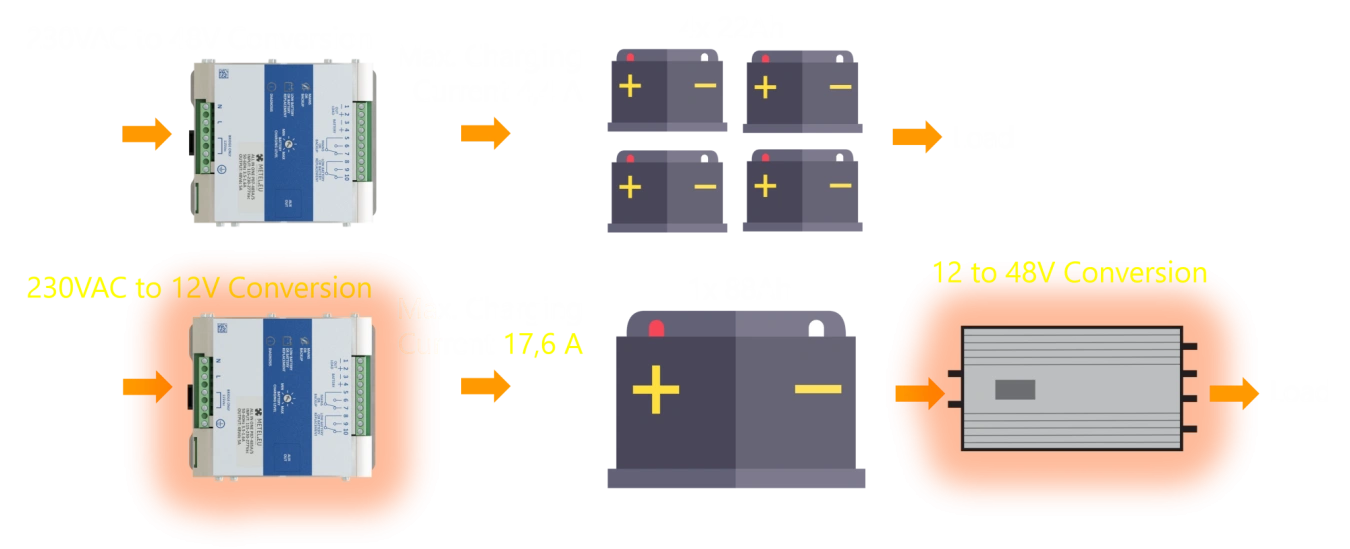
The use of a 48VDC system is preferable to 12VDC because it significantly reduces energy losses during voltage conversion. When converting from 230VAC to 12VDC and then transforming to 48VDC, high energy losses occur, reducing the overall efficiency of the power supply.
By using 48VDC directly, conversion losses are minimized, resulting in higher efficiency, lower operating costs, and better power stability for networked devices. This approach is therefore more energy efficient and more suitable for critical applications with a requirement for reliable operation.
How to ensure RS485 is functional even for a 60-hour power outage?
The following steps can be taken to maintain RS485 operation even in the event of a long-term power failure:
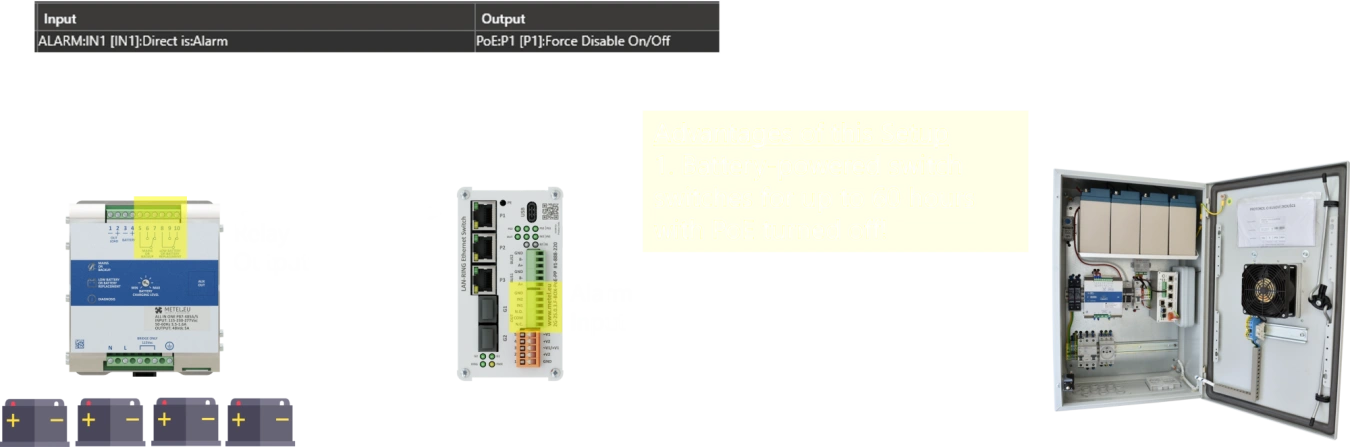
- Connect the relay output "MAINS OR BACKUP" to the alarm input IN1 or IN2.
- Configure an event that disables PoE when a power failure is detected.
In this way, you can optimize power consumption and extend the operating time of the device even in the event of a long-term power failure.
Switchboards powered by public lighting
One of the relatively common power supply methods is public lighting. This recharges the system at night and provides battery power during the day.
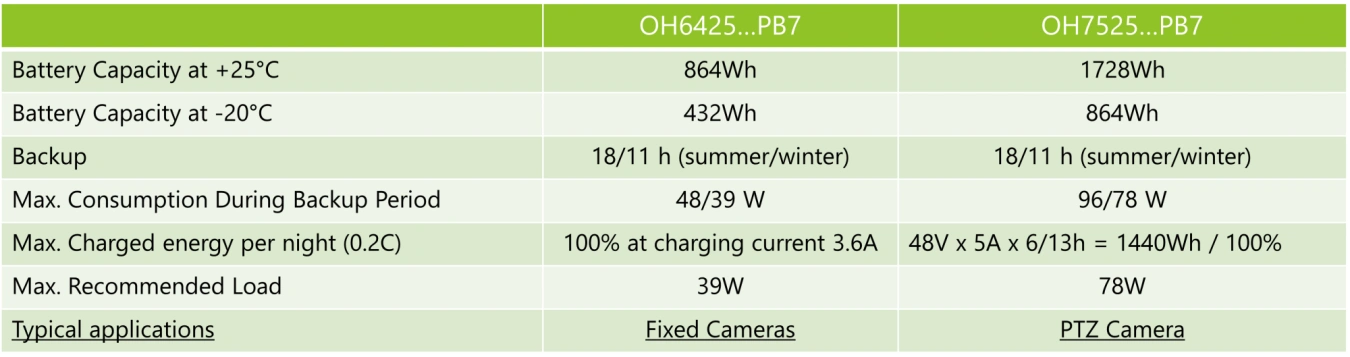
The short recharging time in summer requires a high charging current, which in turn is limited by the battery itself. Depending on the type of lead-acid battery, it ranges from one to two tenths of the capacity. For a 36Ah battery, the maximum recommended charging current is between 3.6 and 7.2 A.
In the winter months, on the other hand, a decrease in battery capacity due to low temperatures must be taken into account.
In terms of high charging currents, LiFePO batteries can be advantageous. However, their use carries one risk. Charging LiFePO batteries at low temperatures can lead to the formation of lithium metal on the anode surface. This can lead to internal short circuits and potential damage to the battery.
Therefore, we recommend using only lead-acid batteries in switchgear installed in areas with winter frost.