

Metallurgical industry
The context of the solution
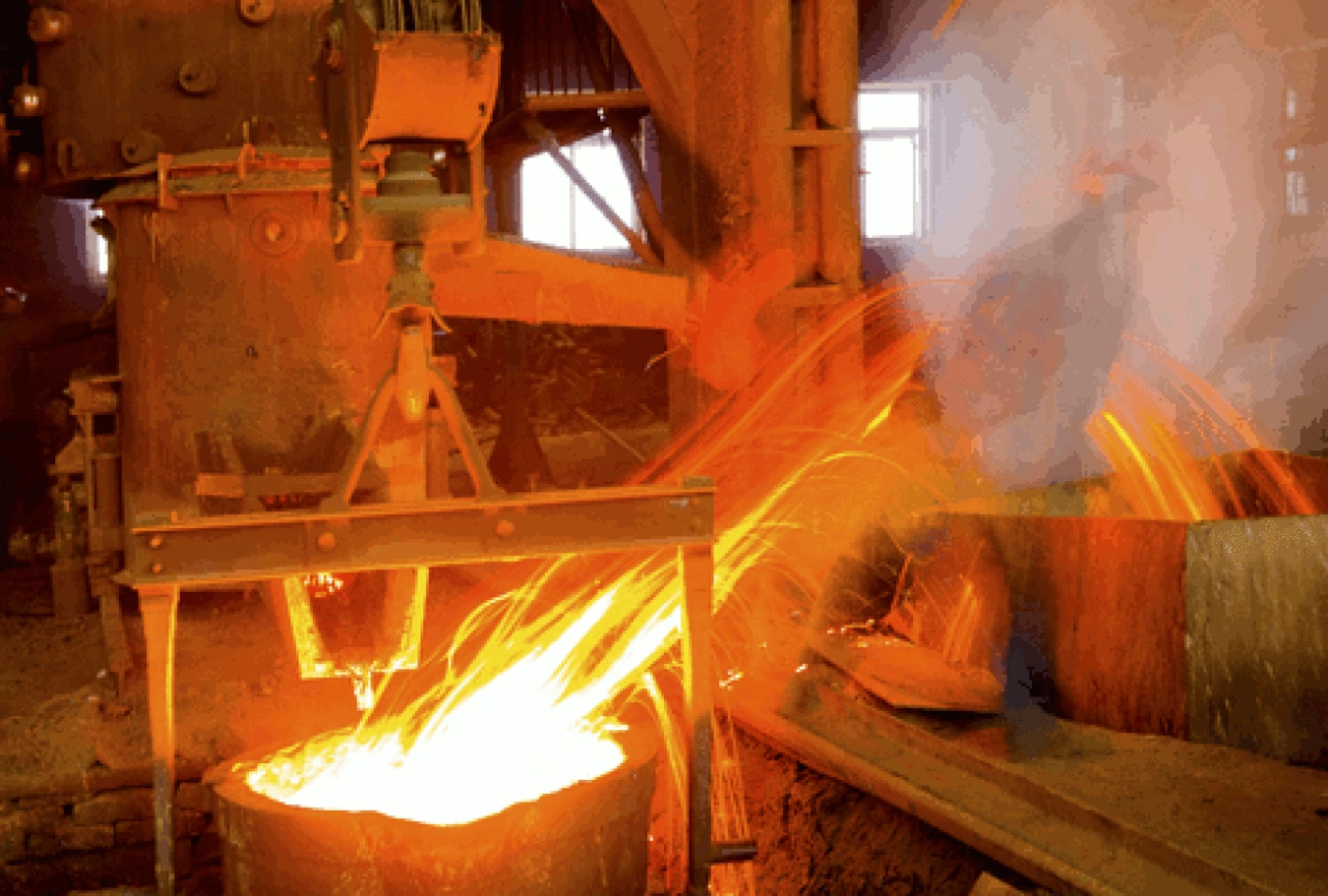
The steel industry is one of the most demanding environments for the installation and operation of low current technologies. ArcelorMittal's production facilities in Ostrava are a typical example of an operation where technology faces extreme temperatures, dust and strong electromagnetic interference. Our cooperation at this site began after 2000, when our technologies for monitoring and securing critical infrastructure were first deployed in these inhospitable conditions.
Solution content
The evolution of the system reflects the technological advances of the last decades:
-
The analogue era - In the early days, we used systems based on twisted video signal converters. In addition to the transmission itself, these had to effectively eliminate ground loops and compensate for high-frequency attenuation over long paths.
-
Optical Breakthrough - A significant shift was the move to optical fibre. Fiber optic converters eliminated interference problems, but ran into the limitation of "one fiber = one camera".
-
Industrial IP Infrastructure - The breakthrough came with the deployment of unmanaged 200M LAN-BUS industrial converters followed by the advanced LAN-RING system.
Today's solution, based on a circular LAN-RING topology, allows not only high-speed transmission of video streams, but also monitoring of status information from I/O modules and the RS485 bus. A key factor for stability in the smelter is the integration of surge protectors directly in the elements and the ability to operate in a temperature range from -40 °C to +75 °C.
Solution advantages
-
Maximum durability - The industrial design of the elements with high protection and vibration resistance minimizes service trips to hazardous areas.
-
High availability (Redundancy) - Thanks to the circular LAN-RING topology, the system remains fully functional even if the route is physically interrupted at one location.
-
Data Unification - The ability to transmit video, sensor data (I/O) and control protocols (RS485) within a single infrastructure significantly reduces cabling costs.
-
Diagnostics and management - Remote monitoring of network status allows predictive maintenance and immediate identification of potential faults without the need for physical field inspection.
-
Long life - Unlike conventional IT elements, these technologies are designed for continuous operation over decades in aggressive environments.