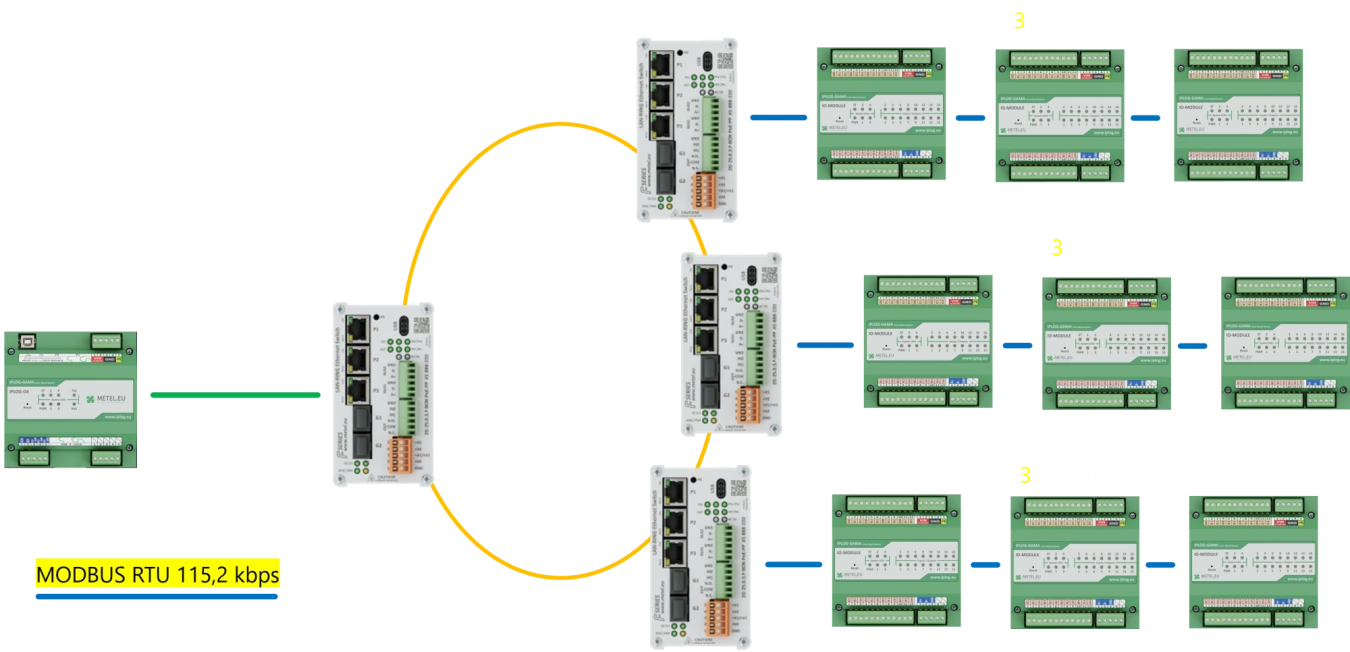

Application with I/O Usage for Control
The transmission of information about the activation of inputs to the relay outputs of another device has been a long-standing part of the LAN-RING system.
In the case where it is necessary to expand the number of inputs and outputs, we recommend connecting up to three IO modules to one switch. With a larger number, the limit of the Modbus table in the switch could already be reached, which must be taken into account when designing the entire system architecture.
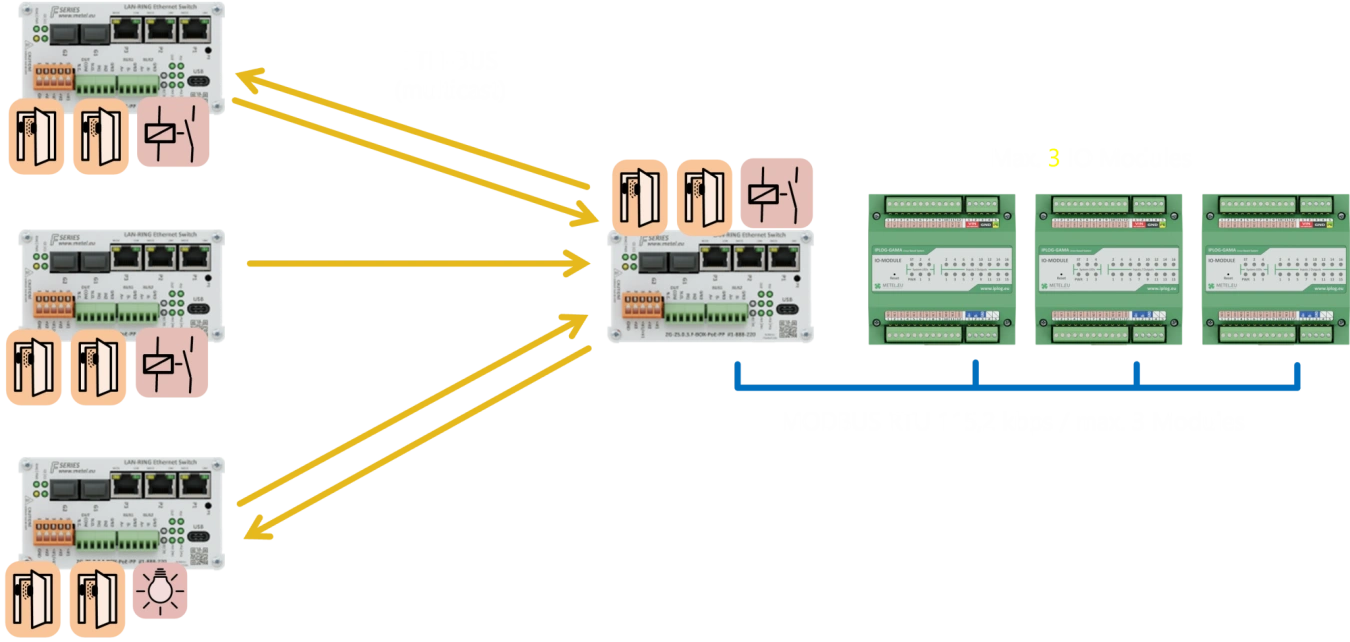
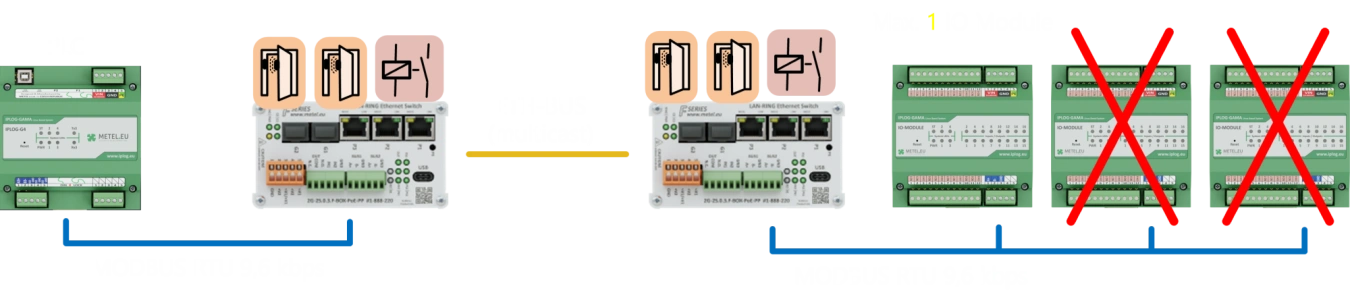
If a PLC unit is used in the system and the goal is to have the remote module behave as a directly connected module to the PLC, this solution is not optimal. It can only be used for a maximum of one module, and this with a limitation of the communication speed to 9.6 kbps.
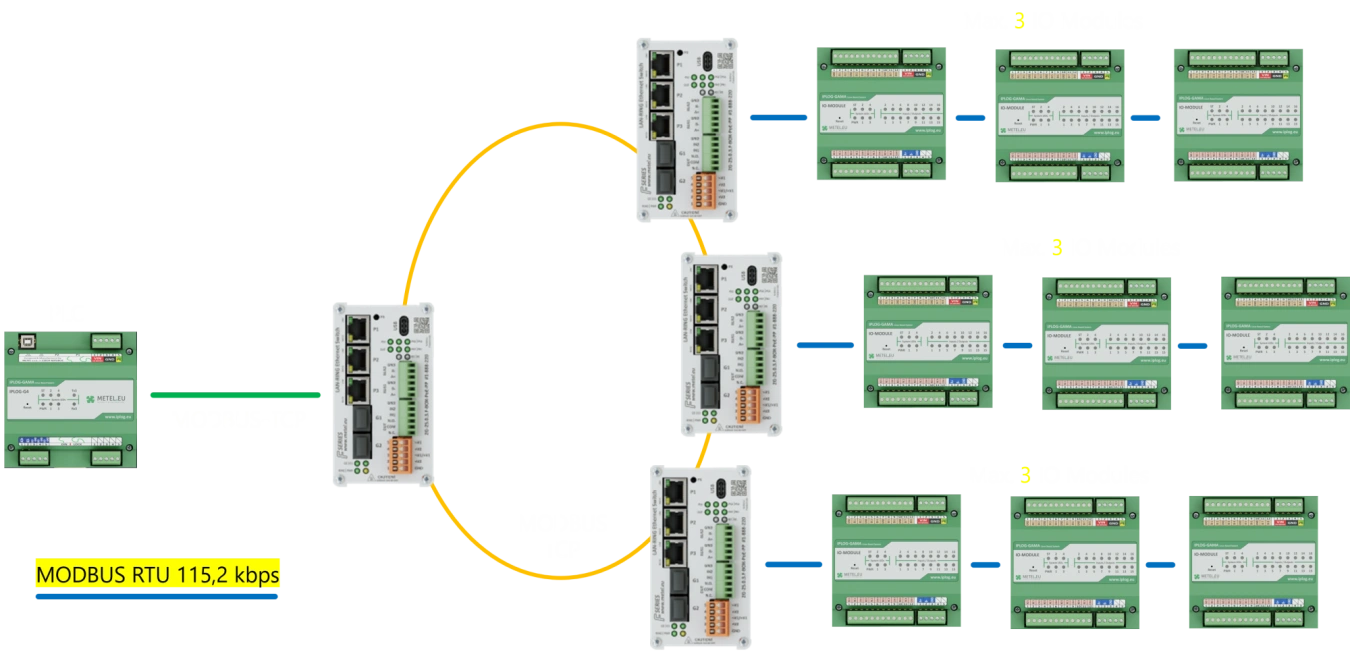
A more efficient solution is to use an architecture where the switches connected to the modules read the Modbus registers of these devices via Modbus RTU. The acquired data is then stored in the Modbus TCP registers of the PLC unit.
The PLC then performs the actual logic evaluation and sets the corresponding values to the outputs. This approach decouples the data acquisition from the control logic, increasing the flexibility of the entire system and simplifying its scaling.
The OH7525 series back-up switchgear is designed for the installation of up to four batteries with a capacity of up to 36 Ah, ensuring a high level of energy independence. This configuration enables long-term operation of network equipment even in the event of a power failure. This flexibility is ideal for critical infrastructures where power reliability and stability are important. The ability to use higher capacity batteries ensures longer backup times and adaptation to specific operational requirements.